

Chocolats du Monde had the opportunity to participate in the annual meeting of Brazilian Bean to Bar chocolatiers, which took place in Sao Paulo last month, followed by a visit to cacao producers in Bahia. Our favorite cacao expert, Sacha, was thus able to combine pleasure and work with a unique human and gastronomic adventure, supported by hundreds of people we won't soon forget.
Before arriving in Brazil, we had in mind some big names in Brazilian chocolate, such as Luisa Abram's wild cacao or Baiani's Tree-to-Bar from Bahia. But we discovered a real local effervescence in the world of artisanal chocolate.
Bean-to-Bar and Tree-to-Bar Enthusiasm
Indeed, the Brazilian Bean to Bar association currently has more than 60 registered chocolatiers, but it is estimated, according to chocolatier Nicolas Danaux (Chocolats Nicolas), that locally more than 300 small workshops working directly with the bean have emerged throughout the territory. The reasons for this development result from a convergence between tradition and policy.
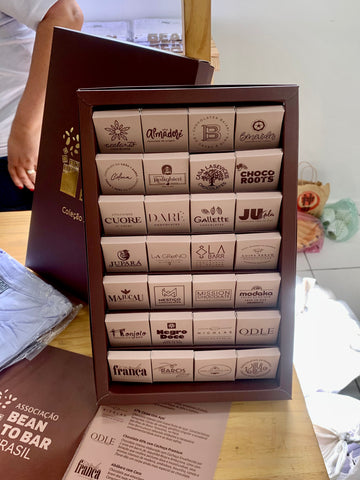
Brazilian Bean to Bar Association Box 2023
Brazil, following various sanitary crises, including the witch's broom disease (a fungus spreading by spores and degrading bean quality, causing 30%-100% loss of beans), and a hint of protectionism, decided to make the import of cacao beans difficult for small structures. Rich in its ancestral cacao culture, chocolatiers naturally turned to local origins to develop their aromatic palette. This relationship allowed for the birth of a fusion relationship between cacao farmers and chocolatiers, when they don't play both roles (Tree-to-Bar).
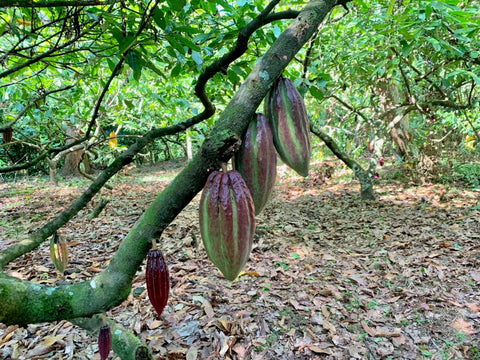
“Cabruca” farm in Brazil, in the heart of Bahia
Discussing with Bruno Lasevicius (president of the Bean to Bar association and owner of Casa Lasevicius Chocolate), we discovered that the term "micro batch" takes on its full meaning in Brazil. Local chocolatiers have developed immense flexibility by creating ephemeral chocolate ranges varying from 20 to 90 kg to test cacao farmers' fermentation work and encourage them to transition to aromatic cacao. Cacao is often paid 10 times more than standard cacao (the price depending on the fluctuating cacao market). To learn more about this topic, we recommend consulting the exemplary work of a handful of individuals in the Tuerê region with the Solidaridad association in the state of Pará.
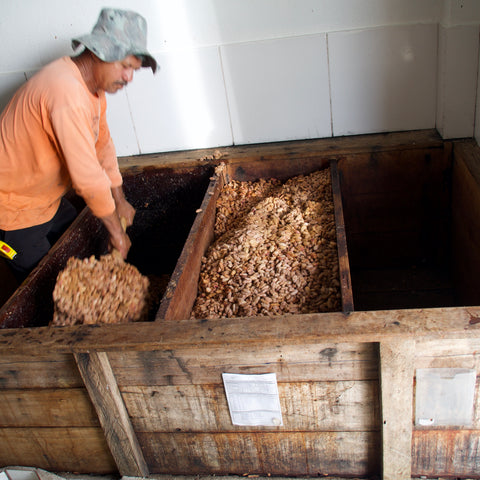
Brazilian Cacao
Brazil has often suffered from a bad reputation in the aromatic cacao market. Its production has fluctuated colossally, falling from over 400,000 tons in the 1980s to approximately 200,000 tons today. This significant variation has caused ruptures in the culture and transmission of know-how in certain states, which preferred to turn to more lucrative productions (coffee, livestock, etc.). This production variation was caused by the fall in world cacao prices, which are not fixed as in Ghana and Ivory Coast, and sanitary crises (witch's broom). Thus, the current situation of Brazilian cacao production is very heterogeneous. This country with a vast territory holds fabulous treasures and also has an ecological division: the Atlantic Forest biome (in the east of the country) and the Amazonian biome in the west and center. Let's talk about terroir then! (which is always close to our heart).

Forastero parazinho in Bahia
Amazon Side
Pará
Pará knows many origins, and we want to introduce you to Tuerê cacao, a true treasure that has been awarded numerous international prizes due to its exceptional quality and distinct origin. It has its roots in a terroir nestled in the heart of the state of Pará, in the Brazilian Amazon, where hundreds of farming families cultivate cacao with a sustainable commitment to the environment through agroforestry (AFS). This cacao has become a source of national pride and a shining example of success for the quality cacao and bean-to-bar chocolate sector in Brazil. The cultivation of aromatic cacao never ceased in Pará, greatly facilitating the integration of this terroir into the Bean-to-Bar movement due to the maintained local know-how even during the low years of cacao.
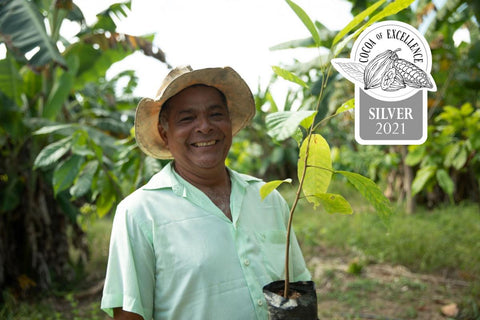
This terroir was propelled onto the international scene of Brazilian bean-to-bar by chocolatier Bruno Lasévicius, who played an essential role in its recognition and contributed to improving local fermentation processes, in collaboration with organizations such as Solidaridad, by testing the famous micro-batches. Recognized among the 50 best cacao beans in the world by Cocoa of Excellence, the Brazilian terroir of Tuerê has already accumulated 18 awards and has become an increasingly prized source for high-quality cacao used in the production of fine chocolates. Local fazendas, such as those of Waldomiro, João Evangelista, Francisco Cruz, are beginning to emerge and take their place in the global aromatic cacao market.
Today, this terroir is expressed through the chocolate creations of Bruno from Casa Lasévicius, C'alma, Tropical Utopia, Mission Chocolate, la brigaderie and many others.
Wild River Cacao
The Amazon is crisscrossed by many rivers, connecting Peruvian, Ecuadorian, and Brazilian forests. These rivers slowly carry water from the upper Amazon basin, which nourishes the lung of the world towards the sea to the east. The birthplace of cacao, the Amazon basin is full of small pod-bearing trees that grow spontaneously. The beans are moved by elements and animals, encouraging cross-breeding and genetic variation in this immense region. In addition, flood cycles cause the rivers to overflow and engulf the forest for several months, regularly fertilizing the soil.
 Area where wild cacao grows in the Juruá Valley, Acre (Photo: SOS Amazônia)
In 2016, the NGO SOS Amazônia launched the "Amazon Values" project seeking to sustainably value Amazonian forests for local communities. The project involves nine cooperatives along the rivers of the Upper Amazon, such as the Juruá, the Purus, Acará, the Tocantins, and others. The project initiated communities living along the rivers to the cultivation of wild plants such as rubber, oils like Murumuru, and especially cacao. The Coopercintra cooperative, helping communities of the Juruá river, initiated 26 families to the collection and cultivation of wild cacao. In 2018, with the success of the cacao harvest and its importance for the incomes of the people involved, 16 new families joined the project. This effort to develop wild terroirs was accompanied by chocolatier Luisa Abram, who wanted to build her chocolate around the idea of Amazonian cacao, where it naturally proliferates. To do this, she forged close ties with communities, associations, and cooperatives. The cacao from these birth rivers continues to surprise us by revealing new, never-before-seen genetics, such as the cacao belonging to the Amelænaceae family from the Acará river.
Atlantic Forest Side
Bahia
Bahia cacao holds a prominent place in the Brazilian cacao industry, representing approximately 90% of national production. Cultivated in the Atlantic Forest region, a biome rich in biodiversity and threatened by deforestation, Bahia cacao stands out for its genetic diversity, quality, and potential for high-end chocolate production. This region was the birthplace of the famous Forastero Amelonado cacao, which took root in the west of the country under the impetus of the Portuguese during the 1850s. Among the cacao varieties cultivated in Bahia are Catongo (white cacao, producing a milk-colored dark chocolate), Forastero, and PS 1319, hybrids selected for their productivity and disease resistance. Unfortunately, local production has experienced significant fluctuations, particularly due to witch's broom disease, which severely affected a large part of the production. Today, initiatives have been launched to reorient production towards aromatic cacao and revitalize the sector, which is losing ground to coffee and livestock farming, such as the FAEV SENAR SINDICATOS project in Porto Seguro, thanks to the work of Elen Santos. This agricultural engineer works closely with cacao producers to help them integrate small fermentation units into their productions, thus allowing them to produce aromatic cacao directly on their farms.

Elen Santos, agricultural engineer in Seguro
Bahia is also renowned for having been the birthplace of the agricultural system called "cabruca." This agroforestry system promotes the preservation of diversity by allowing the cultivation of cacao trees in the shade of a thinned native forest, without deforestation. The south of Bahia state and the north of the neighboring Espírito Santo state are distinguished by their incredible biodiversity. A study compared tree diversity in 22 tropical forests worldwide, placing this region second in terms of biodiversity, with an endemism rate of trees that can exceed 25%. Unfortunately, in southern Bahia, only 6.5% of primary forest remains, and preservation efforts are increasingly essential to protect this unique ecosystem.
We had the opportunity to visit Patricia's farm, daughter of cacao farmers, who took over the reins of the magnificent farm of over 200 hectares. Her entire farm is in "cabruca." Moreover, it is one of the few organically certified plantations, a legacy of her predecessor's work at the time. However, the "cabruca" system is extremely legally restrictive, preventing producers from cutting trees. Today, this type of farm suffers from a bad reputation due to its low productivity. Patricia, through her chocolate brand Modaka, located right on the farm, tries to reconcile environmental and economic commitment.


System "Cabruca" in Bahia
Espírito Santo
Espírito Santo cacao in Brazil stands out for its high-quality chocolate production, unlike its neighbor Bahia, which is more associated with industrial cacao production (a designation undergoing change thanks to Bean-to-Bar), from Trinitario cacao beans and locally favored. Espírito Santo, surrounded by the Atlantic Forest, benefits from a unique geography, situated between beaches and mountains, in southeastern Brazil, making it a state that was once heavily forested.
However, just like the states of Rio de Janeiro and Bahia, Espírito Santo is threatened by deforestation, which compromises what remains of the Atlantic Forest. Initiatives such as cabruca or agroforestry seek to mitigate the impact of cacao cultivation on the region, while best preserving the local ecosystem.


Comments