

Theobroma bicolor is a plant related to cocoa that appeals to lovers of exotic flavors. It is also known by many names such as "cacao blanco", mocambo (majambo), or pataxte. This species of Theobroma (from the same genetic family as cocoa) and cupuaçu is native to South America and is strikingly similar to cocoa in its fruit (or pod, round and grooved with hollow veins) and foliage, with a more rustic appearance.
This plant has been present in the local cultures of its regions of origin where it is difficult to differentiate it from cocoa. In Europe, this plant is still little known and is not exported outside the South American continent.
 |
 |
 |
Theobroma bicolor, Theobroma grandiflora and Theobroma cacao L.
In this article, we will explore both the taste and botanical aspects of Theobroma bicolor, allowing you to dive into the world of this tropical marvel.
Theobroma bicolor, a botanical gem
Theobroma bicolor belongs to the Malvaceae family and is closely related to the cacao tree, Theobroma cacao. It grows naturally in the Orinoco and Amazon basin at low altitudes, particularly in Colombia, Peru and Ecuador. To recognize it in the forest, here are some key botanical characteristics of this plant:

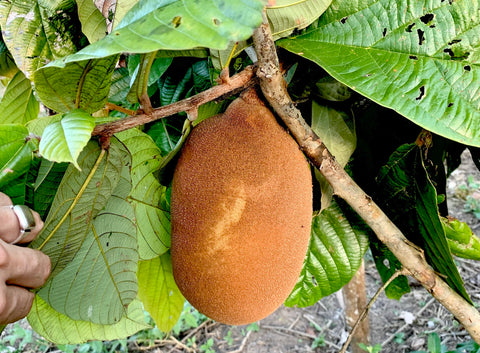
Fruit and foliage of Majambo photo by Racine carrée
- The tree: The bicolor is a medium-sized tree that can reach 15 meters in height. Its leaves are large and oval, a shiny green. It is considered an undergrowth tree that needs the shade of the forest canopy to thrive.
- The flower: The flowers of cacao blanco are small, white to pale yellow and are cauliflorous, meaning they form directly on the trunk of the tree, which is a distinct characteristic of theobroma.
- Fruit: The fruit of Theobroma bicolor is oval-shaped and can measure from 15 to 30 cm long. Its skin is rough, green, and contains a rich, sweet and creamy white pulp. Inside, there are many seeds, which can be used

An exquisite gustatory discovery
Theobroma bicolor is especially appreciated for its seeds and pulp, which are consumed in various ways and offer an exceptional taste experience:
- Flavor: Cacao blanco seeds have a sweet, creamy and slightly tart flavor, which distinguishes them from common cocoa which is more bitter and needs to be fermented. The pulp surrounding the seeds is also consumed for its sweet taste in juice or molasses.
- Culinary uses: Theobroma bicolor seeds are often used to prepare hot drinks, powders or sometimes chocolate. The pulp is sometimes used to make juices or tropical desserts.
- Traditional drinks: In regions where cacao blanco is grown, it is often made into a drink called "chuculat," which is prepared by mixing the seeds with water, sugar and spices.
- Nutritional value: The seeds of Theobroma bicolor are rich in essential nutrients, including vitamins, minerals and antioxidants, making them a healthy and delicious snack. They are also rich in omega 9 and contain caffeine.
- Plant-based milk: Crushed and then powdered, they are an excellent alternative to classic milk and bring sweetness to the mixture, perfect for lactose intolerant and vegans.
Theobroma bicolor, or cacao blanco, is a tropical plant with unique botanical characteristics and an exquisite flavor. Combining a distinctive appearance with a sweet and creamy flavor, this species has conquered palates worldwide. In addition to its culinary value, cacao blanco holds significant cultural importance for indigenous communities in South America. It is a perfect example of the richness of plant biodiversity and the diversity of flavors our planet has to offer.
Bicolor and the Bean-to-Bar movement
Bean-to-Bar chocolate makers are always looking for new aromas to perfect their creations. By turning to majambo, they are exploring a natural and harmonious alliance with cocoa. We have tested the bars that have explored this happy combination:
Racine Carrée, vegetable milk 60%
In this recipe, majambo is ground and used in place of milk, giving this bar a decidedly plant-based nuance. With its sweetness and aromas reminiscent of fresh almonds, this chocolate has the texture of a Dark Milk but with a softer and more flavorful aspect revealed by the majambo.

Majambo milk 60% by Racine carrée
Qantu, Hidden Treasure 80%

Qantu, Hidden Treasure and majambo milk 60% by Racine carrée
A small addition from Nicolas in his latest article "Theobroma bicolor and grandiflorum: can we make chocolate from them?" tells us about the cross between Theobroma cacao and Theobroma bicolor for unique chocolates
"The proximity of the fruits of different Theobroma also allows for experimenting with other approaches, such as the hybridization of cocoa trees with their cousins. These crosses are probably at the origin of the wild beans used, for example, by Qantu to create its incredible Hidden Treasure. Another possibility is to mix cocoa beans with those of other Theobroma. A solution also explored by Barbon, whose results I will share with you soon.
If you wish to continue your research on majambo, we recommend the following websites and articles:
Potential of the amazonian exotic fruit for biorefineries: The Theobroma bicolor(Makambo) case


Comments