

How to make chocolate from cocoa beans
The chocolatier who produces their own chocolate will have the task of sourcing cocoa. This step is not as trivial as it seems. Indeed, artisans rarely have the opportunity to visit every plantation to choose their cocoa. Therefore, they either collaborate directly with a few producers, or they go through an intermediary, called a sourcer, who ensures the quality of the cocoa and its importation.
Once the cocoa is in hand, it is necessary to test the beans to determine how they should be roasted. The choice allows different cocoa aromas to be expressed. This is the roaster artisan's main signature. This step requires experience. Too long or too hot and some cocoas burn easily. Once the recipe is determined, a larger batch is processed. Once the beans are roasted, the winnowing stage follows, which involves separating the cocoa bean from its shell, just like almonds have a skin.
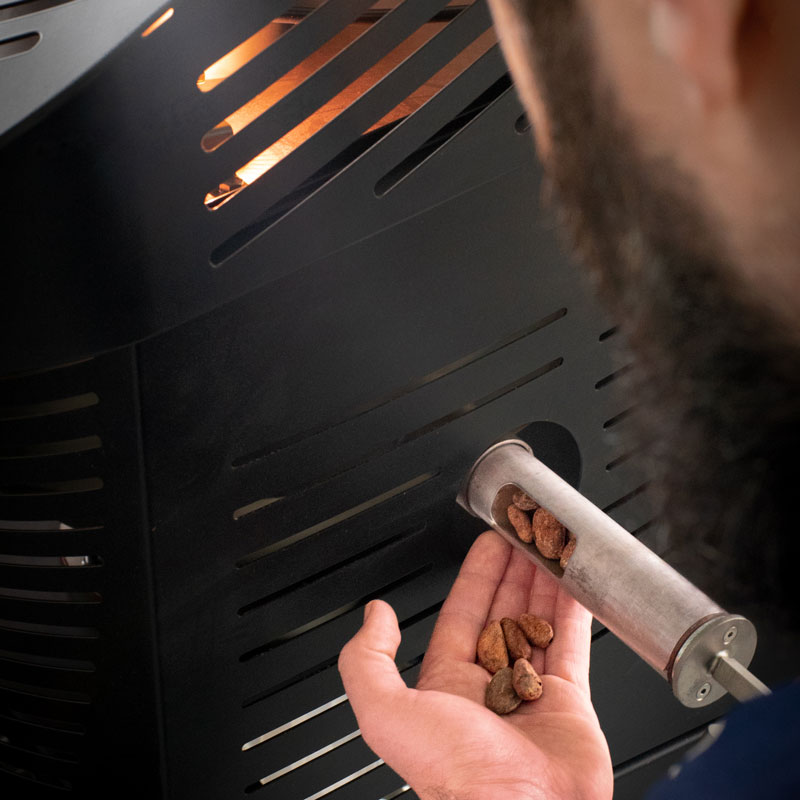
Before using the shelled cocoa beans, they must be sorted. Indeed, some may have roasting defects. If the batch is of good quality, few will be rejected. Most artisans carry out an initial sorting even before roasting. It is also possible not to roast the cocoa to make so-called raw chocolate.
Grinding and conching cocoa
Cocoa goes through another stage before chocolate production truly begins: grinding. Chocolatiers must grind the cocoa beans to reduce them into nibs. Ground even more finely, cocoa becomes liquid and is then called liquor, mass, or cocoa paste. It is only when the chocolatier adds sugar to this preparation that chocolate is obtained.
The longer the grinding stage, the finer the texture of the chocolate. The final result is a matter of choice. Some chocolatiers opt for chocolates with a crunchy texture, others for a very smooth result. In both cases, it is a matter of preference and also culture, with Swiss chocolate generally tending to be very smooth.
A final step plays a role in determining the taste of chocolate: conching. This involves stirring the chocolate mixture, maintaining it between 50 and 90°C to allow certain aromatic molecules to evaporate and thus change the taste profile and texture of the final product.
Molding to make the chocolate bar
After this, the manufacturer must still mold the chocolate into bars or solidify it so that it can be used to make candies and other ganaches. Molding is only possible after a final preparation step called tempering. This process involves heating and cooling the chocolate in a controlled manner. It ensures uniform crystallization and gives the chocolate a glossy appearance.
Knowing how to make chocolate requires mastering all these steps. However, it is possible to try some of these steps even as an amateur. While the exercise requires patience, it is an excellent way to realize the sum of skills required to make chocolate.
Ultimately, this set of manufacturing steps determines the aromatic profile of the chocolate. But most importantly, it illustrates the added value brought by the different actors involved. And you, have you ever tried to make your own chocolate?
Main photo credit: Photo by Tetiana Bykovets.
Find the original article on Nicolas' delicious chocolate.


Comments